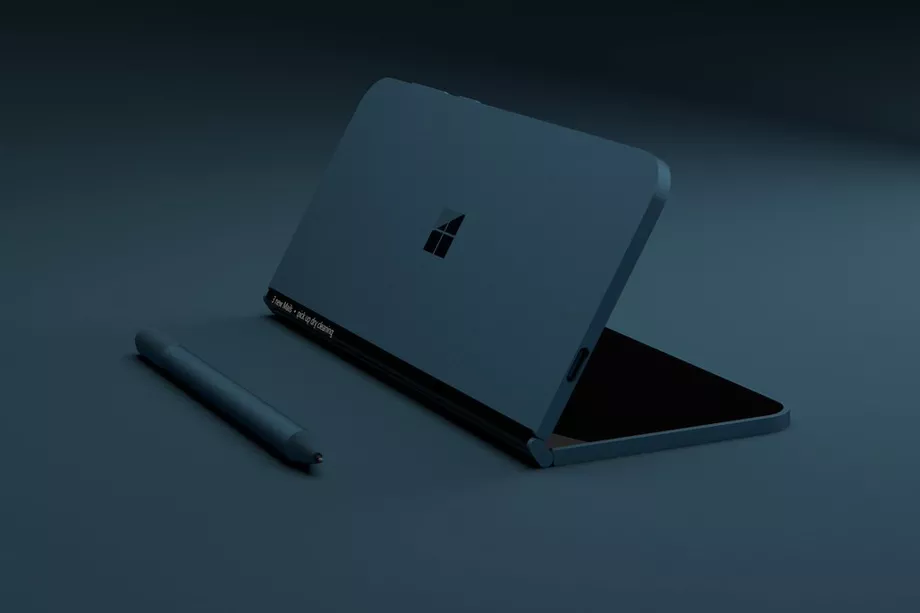
Man, look at this badboy. Sitting there all pretty-like. Causing drool and wallet problems.
No, I’m not buying one, but I’ll be working on a project with it, which is exciting. I feel a camera phase coming on, as presaged by the photos that have been cropping up here again, which is a side effect of me actually taking photos, after what seemed like a year-long break. What can I say, these things go in cycles.
I was tempted by a lens though, a lovely Olympus 12-60mm f2.8-4. I’ve been looking for a faster zoom, as my camera’s kit lens is nice but slow. This one is a beaut. Here’s a shot I took with it on my camera:
Would be nice to have something that wide (24mm equivalent) with a pretty blurry background like that.
The GH2 is out, which should tempt me to upgrade, but I’m more interested in new lenses, as the new body doesn’t seem crazy better.
I was looking through the ol’ archives and realized I had never written about this thing. I have a draft called “what the world needs now is a four-month-late post about the iPad.” So clearly I wasn’t in love with the result. But I also quite like this one that I did about the iPhone a year into owning it, when I was able to look at how it had changed my… life seems a little hyperbolic, so let’s say… personal computing cocktail.
I’ve had the iPad for eight months. Things have changed for sure because of it.
The comparison you want to make is to a laptop. I’ve been a laptop user for a good ten years, so I understand why. You want to know if the iPad can replace your laptop. It’s very hard to answer this, but if I had to, I’d say no. It’s totally not the same thing.
With the announcement of the Nintendo 3DS and Sony NGP, the next generation of portable games machines is here. I don’t think it’s going to do so well.
As you may recall, I shot a bunch of documentary footage over the summer as part of Broken City Lab’s Storefron Residencies for Social Innovation. When I was wrapping up there, I started writing some posts about how the documentary-tech side of things went. However, with a summer and fall full of huge life events, I never posted them, and indeed work on the post-production for the doc ground to a halt. I’ve been getting back into it though, and figured I’d post these with some updates.
As my equipment setup wouldn’t have been possible even three years ago, the thoughts below may be helpful to those exploring video DSLRs for documentary production. Others may want to hit snooze, but there ya go.
So if I see something online I want to watch, it gets saved somewhere so I can load it up on my TV. Or possibly my portable device.
That would be nice.
I use Plex, so a plugin for that would be great. But I’m flexible. The important part is, I’d mostly rather not sit at my computer to watch things – it’s best to watch things in the best place for watching things, my couch & TV. As instapaper is to reading…
This post is brought to you by the alternate reality where the internet is standing by to take my stupid ideas and make them happen.
When I was small I hid books under the covers. I read them furtively from the light that reached into my bedroom from the hallway. So I’ve always been a voracious reader.
The past decade has seen me self-inflict great guilt for not reading like I used to. By which I mean I stopped reading as many books. Gradually I realized that I wasn’t actually reading less, I was simply reading differently. Instead of books, I had developed a bottomless hunger for the web, and later, news feeds. I was better informed about current events than I ever had been when I only read one newspaper, and also familiar with a decent stable of niche interests.
A few years later, the inevitable feed purge occurred. You can oversubscribe to news feeds quite easily, and the mail-inbox metaphor that almost all feed readers use transmits a sense that you have to read everything. Consequently you gradually build up an impractical amount of feeds, and an unnecessary feeling of obligation . One day I found myself spending an hour after work trying to get through everything, and realized the mental trap I had fallen into.
I also had come to realize that the weighting of web / news content to long form (books) had to be corrected.
Now, my reading ecosystem seems balanced, efficient and pleasant. It would seem so exotic to my younger self: the magic book that contains all books. The books transmuting into different forms. The instant access to so many sources. But it’s really just a series of tools.
Like you didn’t know, it’s iPad day in the US, and here I am posting about my new iMac. But it ties in, I swear!
Anyway. After 10 years of buying laptops I bought a 27” iMac a couple weeks ago. I’m still deciding whether this was the right decision, but I’m pretty sure it is.
Andy Ihnatko on the iPad – what that guy said. I had a post drafted about the iPad from a few weeks ago but it didn’t seem to add much to the talk at the time. Despite initially feeling underwhelmed, the product quickly made sense. Traditional computer interfaces don’t work on small screens (they barely work on 12” screens let alone 10”), and rather than start from scratch Apple is building upon the touch OS that when you think about it is already quite an achievement in usability, much more so than the Mac OS. There are a lot of super-non-nerds I know who recently got iPhones and they understand it in minutes. In a couple days they are showing off their new apps. This never happened with the Mac or Windows.
What did you think? I’m moderately impressed. During the keynote I felt underwhelmed, but once we learned the price was $500, I changed my tune. Apple was clever to leak the $1000 price point ahead of time.
Perhaps the disappointment is that this is a glorified iPhone with some extra eye candy and none of the revolutionary new interface hype we had been inhaling over the past little while.
The price reinforces my feeling that this is primarily Apple’s response to the growth of the netbook market. However, the netbook and the iPad both menace laptops in general. Since I got the netbook, my 15” MBP remains on my desk, and for the first time I am considering buying a desktop to replace it. Netbooks make two-computer life possible to those of us who aren’t among the richest princes in Europe. My dream portable remains something like the MacBook Air, but that thing seems dead in the water now, especially at three times the price of the iPad. I expect they may eliminate the Air altogether and perhaps introduce a new model that is essentially the iPad with a keyboard, with a laptop form factor. Or maybe that’s just me dreaming.
The clunky peripherals are a surprise, especially the keyboard dock. It seems very un-Apple. I also hear from Gizmodo that it can be used with Bluetooth keyboards. That’s awesome, and makes me think I could stand to have it instead of a netbook.
As an ebook reader? I imagine hardcore readers will stick with proper e-ink readers and/or actual books, but casual readers may well like the eye candy of Apple’s presentation and not worry too much about eye strain and the higher prices of books. But the Kindle and friends are going to have to come down in price, stat.
My biggest problems with it: the encroachment of the closed iPhone app ecosystem into general computing. Also, still no multitasking? Granted, if the apps launch super-fast and save their states, perhaps we don’t need it as much. But still.
Anyway, that was a fun day. I have a million little questions about specific implementations that I guess are going to have to wait a couple months. I think I can deal with that.
This is one of the facets of the ongoing Apple tablet megarumour that really intrigues me – an Apple 3D interface patent.
In “Systems and Methods for Adjusting a Display Based on the User’s Position,” Apple proposes a display that can automatically adjust the point of view and angle of 3D objects, or even 2D objects arranged in 3D space, based on the changing position of the viewer in relation to the display. Example: imagine you are viewing some 3D object on your monitor. A sensor could let the computer know when you move your head to the left, and the object would subtly change position and/or rotation so you could see the left side of the object. Alternatively, you could move your head up so you could see the top better.
Head tracking. Fuck yeah. There was another 3D-related patent filed in January, and while it didn’t have any head tracking, it does lend credence to the notion that, come Jan 27, shit be poppin’ – in 3D. (Well, hopefully without the glasses.)
For interest’s sake, here are a couple of old posts of mine in which I drool over 3D interfaces: onetwo.
It’s been a month since I got the Kindle 2 and I’ve now read a few hundred of what we used to call ‘pages’ on it – apparently now you call them ‘locations’. So I thought it would be worth reporting back in.
Again, I was thankful every day for the slim size of this thing compared to the monstrous hardcover it immediately replaced. The next bonus was that I was carrying essentially as many books as I wanted at the same time. I don’t often feel the need to reread part of King Lear, but I suppose now I can. It would be very nice for frequent travelers – if they let you bring it on the plane I guess.
The screen: beautiful and far superior to reading off a backlit screen OR from a cheap paperback, but not superior to a nicely-printed hardcover. Also, the fixed font still seems restrictive.
The wireless capabilities of the device are mostly liabilities in Canada. The coolest wireless features (email your kindle documents, surf the web, auto-grab news feeds) are not available here, so you’re really only using wireless if you want to buy books from the kindle, or if you’re syncing your last-read position with the iPhone app (which is now available outside the US, BTW, and is awesome). For that, you get a pretty substantial battery drain – at least two weeks with wireless off turns into only a few days with wireless on. So I’ve taken to only turning it on when needed.
I have found Calibre to be quite cool. OK, it needs an interfacelift – it has the rugged bad looks of a java app. Also, it’s pretty slow. But feature-wise it impresses. You can convert pretty much any source (rtf, lit, pdf, doc etc.) to kindle format. It has a bunch of free news feeds pre-set up, including many newspaper sites. On your kindle, these look remarkably like the official newspapers you would pay $15/month to receive automatic, battery-killing wireless delivery thereof.
The two cool things I have to mention: one is instapaper’s kindle export. The auto-email to kindle doesn’t work here, but you can manually export your instapaper articles all at once and drag them onto the Kindle USB-stylee. Talk about “read later”, and in style. The other thing is I came upon the link to Annabel Scheme the other day, a novella with a free ebook version. It’s PDF which works on the kindle reasonably well, and the story is GREAT. I honestly wouldn’t have read 128 pages of PDF from my computer screen. That makes me think of a glorious world where I’m grabbing juicy morsels of lesser-known yet tasty author-fruit from the low-hanging boughs of the intertree, and slurping them down in e-ink luxuriousness, and some of the promise of said intertree becomes a little more real as its fruit gets more pleasant to consume.
There’s something very retro futuristic about the Kindle right now. Any black & white e-reader, really – under the shadow of the almost assuredly upcoming Apple tablet, or even of near-future advances in e-ink screens (colour screens, touch screens, combo OLED & e-ink screens), the objects seem, despite the permanence of the ink on screen, even more fleeting than gadgets normally are.
That said, I’ve found I’ve read a lot more since getting the Kindle. This could be a passing fancy, and perhaps the reading will subside once a shiny new gadget comes along (or Mass Effect 2 comes out), but for now, I can’t complain.
Some questions about this tablet thing, that have made me doubt its existence. Questions that the excellent Daring Fireball article also addresses, but does not answer – no one has answers right now.
What is the screen like? If it’s LCD, is Apple really expecting to succeed in the ebook market? The single defining feature in a suddenly-cluttered, apparently reasonably successful market is the e-ink screen, notable for the absence of backlight and close resemblance to print, but also for many side effects that make them bad for other uses (low refresh rate, monochrome, poor contrast). Apple may well view readers with some condescension – “no one reads any more” – and if so, they may settle for an LCD, which is good for everything except reading. But if they have actually tried to solve the problem, they may have something cool up their sleeves. Perhaps two layered displays? Does the backlight turn off when a book is opened? I’m very curious.
How are you supposed to type on its presumed on-screen keyboard? Do you hold it in one hand and type with the other? Do you hold it with both hands and type with your thumbs? The latter is actually more than doable on a 7” screen, and would probably work on 10” as well. But that leads to the next thing-
Is it really going to be a grand? That’s laptop money even for Apple (and at the netbook price range, three laptop money). While that makes my heart sink because it means I wouldn’t buy it, it also makes me a little excited because it means that Apple may be trying to replace the laptop, not slide in alongside it in a rather crowded gadget matrix – phone / “smartbook” / netbook / laptop / desktop. That’s ballsy stuff, although I remain skeptical of the value of a keyboardless computer. I sure as hell head to a computer when I have to type anything more ambitious than “LOL” on my iPhone, despite being comparatively good at thumb-bashing.
I think Apple may well have arrived at the tablet form after experimenting with netbooks – one can imagine they are both trying to solve the same problem. I’m just concerned that throwing out the keyboard throws out more good than bad. Then again, the Nexus One’s lack of a hardware keyboard may indicate that smartphones are evolving away from such dangly bits, like the arms of a tyrannosaur. So will we learn to stop typing and love the screen?
Whatever, it’s exciting stuff for the gadget nerd. I’m almost as hyped as I am for the final season of Lost, and that’s saying something.
Because I have to get back in the blog posting habit.
First, about 10.6.2 breaking Atom-based Hackintoshes – lots of FUD like this article. Really, everyone? “Puts an end to the hackintosh”? Was 10.6.1 that bad? In my experience, your apps aren’t going to go incompatible with a x.x.x release. Nevermind that the mydellmini.com champs are surely on this shit right now and it will be sorted within weeks.
Second, because of this, and ‘cause ranking shit is fun:
1. The Wire
2. The Sopranos
3. Deadwood
4. Lost
5. Breaking Bad
6. Mad Men
7. Arrested Development
8. Tim & Eric
9. Battlestar Galactica
10. Firefly
With props to Dollhouse (sorry to hear you’re cancelled). It had massive problems, but on the strength of “Epitaph One” alone, deserves to enter the TV pantheon.
There is no question in my mind that cameras like this are the future for many of us.
By us I mean those interested in both still and motion picture photography. I’ve been into both fields for a while, both by hobby and trade, and it still blows my little mind to think I could afford a thing like this. It’s been a long, gradual and perhaps predictable time coming, but that doesn’t make it seem any less crazy. When I was in university we shot on VHS, and people were saying Hi-8 video was the future. Then it was the DV “revolution”. I split on a cheap DV handicam with some friends. But you still couldn’t get a nice image with these things – you could imitate video stuff, but never convincingly film. For that you needed to shoot film, which was a mulit-thousand-dollar proposition for camera rental & processing. Soon, we were lucky enough to be able to shoot on early pro HDCAMs like the Sony F900, but that was still a half-million dollar camera. A few short years later, the Red is here at $20,000, which is mind-blowing to anyone in the industry.
And now we have sub-$2,000 video SLRs like the GH1. Cameras with great optics, all-digital workflow, 1080p24, compact size, full manual control. Interchangeable lenses, decent low-light shooting. Total craziness.
These are amazing cameras, but they have kinks. I’m sure in a year or two this category will have stabilized, the feature set will be clear, and choices will be easier. The next iteration of the GH1 (might I guess GH2?) will solve a lot of the problems with this thing. Because yes, there are problems.
no video out – you can put HDMI or composite out when reviewing shots, but not while capturing. This makes it very hard to do a lot of things where the director and camera operator are not the same person.
poor audio support – the GH1 has a surprisingly decent built-in mic, and an optional mountable shotgun mic, but most of the time, I’d want to hook up a wireless lavalier mic. You can do that, but the audio in is a minijack that auto-levels the signal. For best sound, you need to record into a separate audio field recorder and then sync in post. That’s a couple hundred extra and a big pain in the ass.
low bitrate – the camera has great optics, but the files it saves are too low a bitrate. Sometimes this bites you, sometimes it doesn’t.
AVCHD – I find this to be a shitty codec, which causes headaches in post as it must be converted to something Final Cut can use (still haven’t figured out how to get it into the Avid). When you combine AVCHD’s interframe compression with the low bitrate, especially in 1080p24 mode you get compression mud in certain situations, like fast camera movement and/or complex detail (grass, especially). This sucks. There is an MJPEG mode that is mud-free, but it’s only 720p30 and is still low bitrate.
I don’t want to sound complainy here. The GH1 has a lot going for it. Mainly:
I found the still modes to be awesome. I may not be the best judge, not having used a lot of DSLRs, but I’ve gotten some great photos out of this thing.
The flip-out LCD is a lifesaver. Every camera should have this.
the kit lens is impressive. It’s the equivalent of a 28-280mm zoom, which gives you a lot of options. Its silent autofocus is another engineering marvel for an SLR. I really never thought I’d use autofocus, but it’s quite smart.
An advantage of the category in general: these cameras are really small compared to video cameras, and thus really stealth. You can get away with a lot. Except you’ll have to put up with people posing as they wait for the ‘click’.
This is another categorical feature, but one that compares favourably to most video cams, even much more expensive ones: interchangeable lenses. I’ve picked up a fast 50mm FD lens and the results have been really satisfying.All the cameras in this category, which right now includes the Canon 5DMkII and the new 7D, suffer from strange, idiosyncratic drawbacks.
Like I say, I’m figuring in a year or so the dust will have settled, each manufacturer will have figured out the featureset they need, and eliminated the needless problems. Red’s cheaper camera Scarlett will theoretically be on the market, too. No matter how you slice it, it’s a great time to be shooting, and it will continue this way for the forseeable future. Perhaps one day we will simply exhale a fine mist of microscopic flying camera bugs and then let our algorithms cut it together, but until then…
I love the feel of this camera in the hands. I love old school film cameras with all their manual doohickeys and I don’t like bad digital compacts with all the navigating poorly-laid-out on-screen menus. This thing has got old school buttons and levers, and where you need to go into menus, they are very well designed. The flip-out LCD is from heaven. Only thing I don’t like is the absence of focus marks on the lens. Still getting used to manual focusing with this bastard – the autofocus is good, so I’m not complaining too much.
It takes a bit to get used to the video. I got into the stills part right away. As I mentioned I have plenty of experience with shooting stills, and so I saw the improvements a camera like this makes possible right away.
On the video capture side I have few skills, other than general knowledge of photography (well, plus a wealth of skills in post, but that’s anoher matter). Also, this camera’s advantages in cinematography are tricky to unlock.
The post workflow is one thing. For me, it actually takes longer to get my tapeless footage off this camera than it did with tape. That’s because you have to convert at least once from AVCHD -> ProRes if you want Final Cut to be able to digest it (here’s one video task that may actually be better on windows systems). You need to convert again if you want to remove the 30i wrapper from your 24p footage. You can shoot slomo since the camera has a 60p mode, but that involves some trickery again.
Capture has its own challenges. I certainly saw the AVCHD ‘mud’ (compression junk as a result of the codec breaking down) that happens with fast pans. This is disappointing to say the least, and hopefully panasonic can address it in a firmware update, perhaps by upping the bit rate.
I personally needed to get a ND filter for daylight shooting; if you’re looking for ‘film look’ bokeh, you want some filters going. Once I had that I got better-looking footage.
Finally, camera shake is an issue in something this small. It’s okay if you’re shooting slomo. But if not, you either want to stay wide or get some means to stabilize this badboy. I had okay luck with the camera on my lap or otherwise propped against something, but i’m also looking into either a shoulder brace or steadicam-y type thing, and there are many options that I’m still shopping around for.
Once you figure out some of these things, you can get some excellent results. Here’s two vids of test footage. (You can’t watch them in HD through these embeds, so perhaps click through to the vimeo pages.) Here’s an early, not great one:
I’m happy with the footage on our back patio (the girls chatting), but little else. That footage looks great because the camera’s stabilized, I’m able to get some bokeh, in part because it’s not too bright. The footage on queen street in direct sunlight is pre-ND filter and so the aperture is closed down, meaning there’s too much DOF. A lot of it was too shaky to use, too.
Here’s a later vid, with footage from Pride last sunday:
As you can see, the slomo works great. It smooths out the camera jitter awesomely. Also, I had the ND filter by then, and it was cloudy, so backgrounds are all pretty n’ soft. I look at some of these shots, and think I shouldn’t be able to get them, the camera being so cheap, and me being nearly unskilled.
The other nice thing is how people deal with the camera. It’s small and has the body of an SLR. I think at the AlternaQueer tent people thought I was a news photographer. And out on the street there were so many cameras I was more or less invisible. Because of the massive proliferation of cameras these days, the incredible 280mm zoom this thing can do, and the appearance of the camera’s body, I found myself able to go pretty much anywhere and take pics of anything with no problems. That was a nice surprise.
Anyway, I hope to shoot a few more tests this week as there are still things to figure out and questions to answer. Dealing with sound is one of them.
Couple things. One was a discussion about GPS automated direction-giving, in-car and, in my case, on-phone. We talked about how everyone pretty much agree that GPS will get you there, it will just send you there in weird ways. It’s worth double-checking the directions, in other words. However, we concluded that in 10 years, it might be a different story. The ability to navigate will have become an obsolete skill.
The other thing was hearing on This Week in Photography that photographers are feeling pressure from computer generated images. That is to say, product shots that used to be done by whole teams of humans are now being made in CGI. Presumably the next step will be for human model shoots to be replaced as well – think of the poor unemployed models!
It’s tempting to argue that some areas will never be taken over by the machines. For example, we’ll always need photography for the news, right? Well, I saw a CGI re-enactment on US news recently, in a story about the arrest of the suspects in the recent domestic terror incident. It was horribly done (and lampooned on the Daily Show), but nonetheless it was there – the prospect of news without the footage.
Everything seems normal, but in the background that exponential evolution keeps on tickin’.
I was just doing some camera research and stumbled upon some interesting stuff.
I’m what you call prosumer when it comes to cameras, both video and still. I’ve set up my own darkroom and processed my own film, and used a film SLR for many years. On the motion side I’ve worked in film and TV for many years. However, in a still camera, I tend to prefer small and portable to an SLR, as I can’t take pictures if I don’t bring it with me. And on the video side, until extremely recently, it was impossible for an individual to own something close to pro quality, as pro film and HD cameras tend to cost half a million dollars. That has obviously changed, and now with the Red camera, HD camcorders, and video-enabled SLRs, it’s a different world.